
Last updated: 21 November 2026 · about 6 minutes to read
Dutch traffic signs: all categories and meanings explained
All official traffic signs in the Netherlands are listed in Annex 1 (Bijlage 1) of the RVV 1990, grouped into eleven categories (A to L). Once you recognise the shape and colour, you can read almost any sign on sight — including signs you see for the first time in your CBR theory exam.
This guide gives you the overview of every category, the key exam signs for both car (licence B) and moped (licence AM), how zones, sub-plates and shark teeth work, plus three quick practice questions.
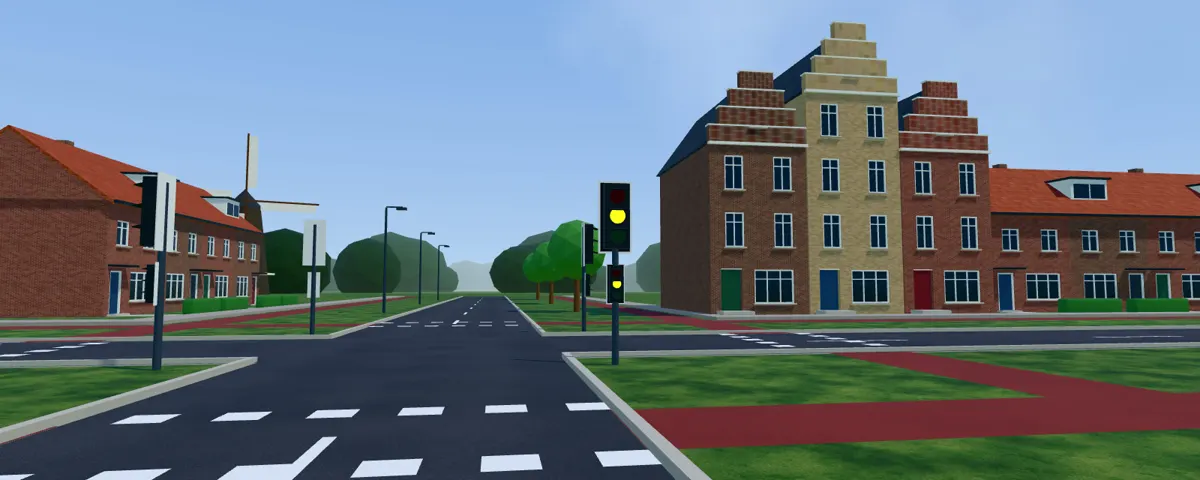
The 11 categories of Dutch traffic signs (RVV 1990 Annex 1)
Every Dutch sign has a code made of a letter and a number (such as B6 or G12a). The letter tells you the category:
| Series | Category | Typical shape & colour | Well-known examples |
|---|---|---|---|
| A | Speed | Round with red border (or blue square for advisory speed) | A1 speed limit, A2 end of speed limit, A4 advisory speed |
| B | Priority | Yellow diamond, inverted triangle, octagon or triangle | B1 priority road, B6 give way, B7 stop sign |
| C | Closed / prohibited | Round, white with red border (or red with white bar) | C1 closed in both directions, C2 no entry (one-way road) |
| D | Mandatory direction | Round, blue with white arrow(s) | D1 roundabout, D2 pass on the side of the arrow, D4 straight ahead |
| E | Parking and stopping | Round blue with red border/bar or blue square with P | E1 no parking, E2 no stopping, E4 parking area |
| F | Other orders and bans | Round with red border, or square/round blue | F1 no overtaking for motor vehicles, F5/F6 narrow-road priority |
| G | Traffic rules | Blue rectangle or round blue | G1 motorway, G3 autoweg, G5 erf (home zone), G11 cycle path, G12a cycle/moped path |
| H | Built-up area | Blue rectangle with town name (red slash = end) | H1 built-up area (50 km/h default), H2 end of built-up area |
| J | Warning | Triangle pointing up, white with red border | J1 uneven road, J22 pedestrian crossing, J24 cyclists and moped riders |
| K | Signposting | Blue (or white) with destinations and road numbers | Direction signs on motorways, regional roads and cycle routes |
| L | Information | Blue rectangle or square | L2 zebra crossing, L3 bus/tram stop, L8 dead-end street |
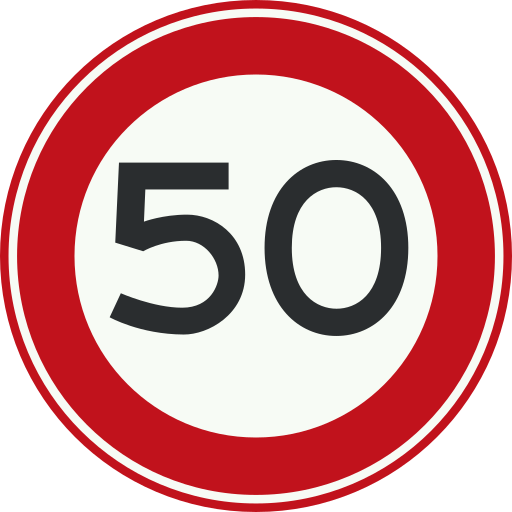 A1Speed limit (50 km/h)
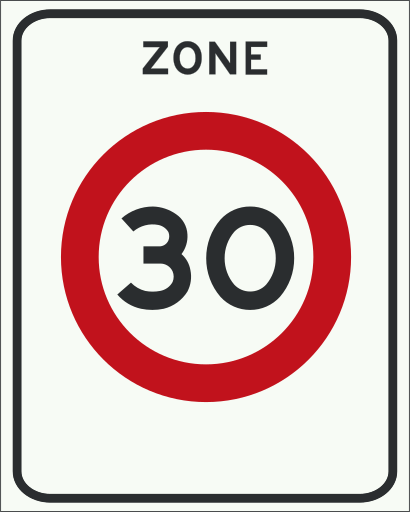 A1-30zone30 km/h zone
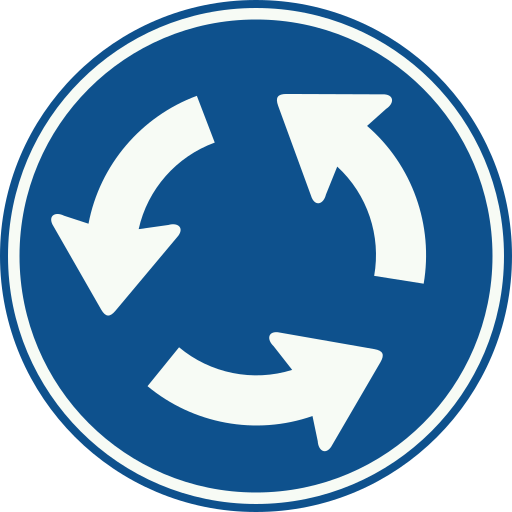 D1Roundabout; mandatory direction
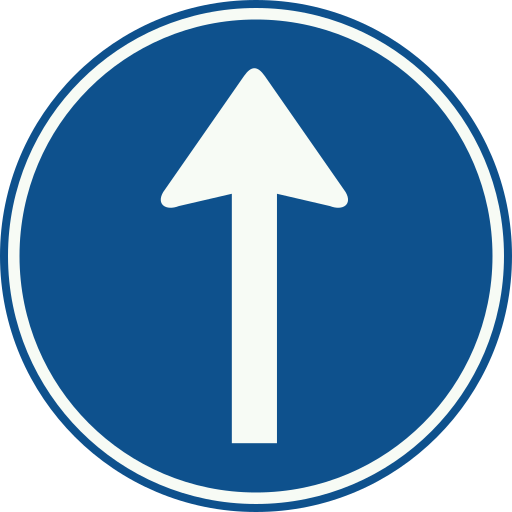 D4Mandatory straight ahead
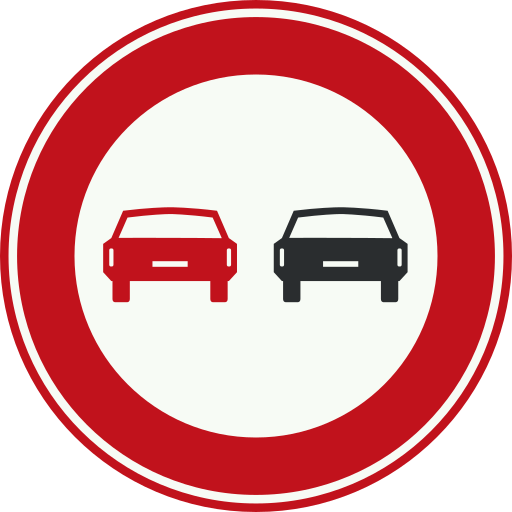 F1No overtaking for motor vehicles
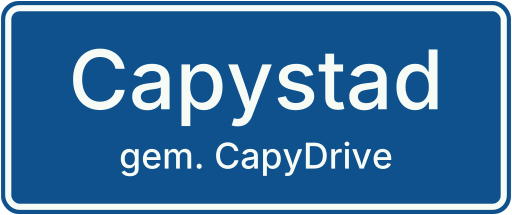 H1Built-up area
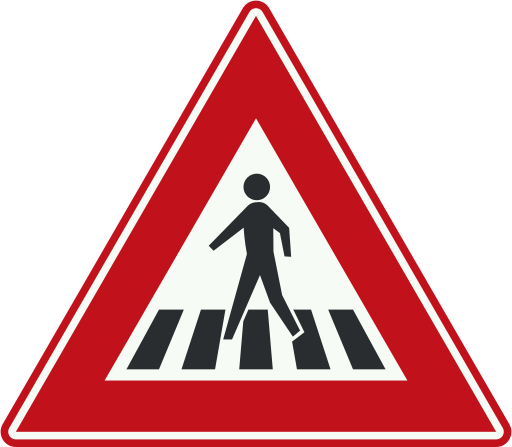 J22Pedestrian crossing ahead
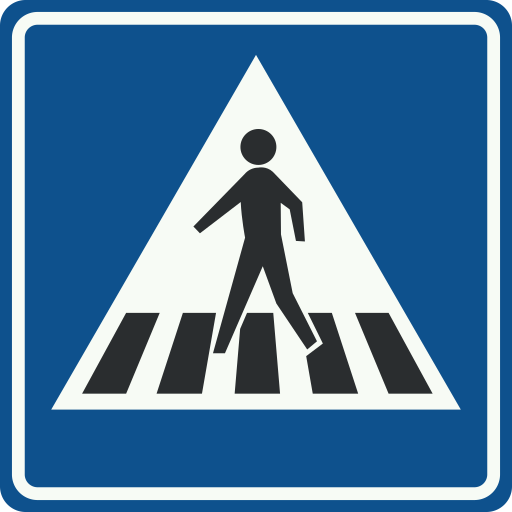 L2Pedestrian crossing (zebra)
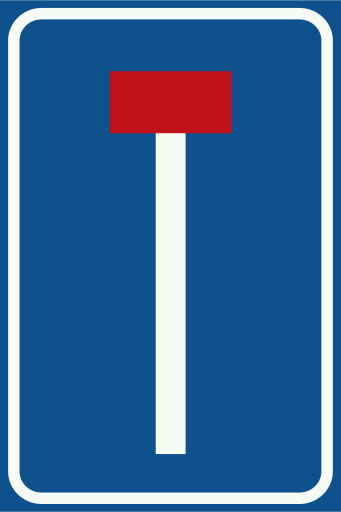 L8Dead-end street
Shapes and colours: read any Dutch sign in 2 seconds
You do not have to memorise every sign as an isolated picture. Shape and colour immediately tell you what kind of rule a sign sets:
- Triangle pointing up with a red border (series J): warning of a hazard ahead. Stay alert and adjust your speed if needed.
- Round with a red border (series A, C, F): prohibition or limit. Whatever is shown is forbidden or sets a maximum.
- Round blue with white symbols (series D, G): mandatory order. You must follow the direction or use the path shown.
- Round blue with red border and slash or cross (series E): no parking (single slash, E1) or no stopping at all (cross, E2).
- Rectangular or square blue (series G, H, L): road rule or information, such as a motorway (G1), erf (G5), built-up area (H1) or zebra crossing (L2).
- Yellow diamond (B1), inverted triangle (B6) and red octagon (B7): priority. Their unique shapes make them recognisable even from behind or covered in snow.
Priority signs, shark teeth and the legal hierarchy
In the CBR theory exam, signs rarely stand alone — they appear alongside traffic lights, markings and general traffic rules. Remember the strict hierarchy in the RVV 1990:
- Instructions from a police officer or authorised traffic controller override everything — both signs/lights and traffic rules (art. 84).
- Traffic lights override priority signs (art. 64). When the lights are working, ignore priority signs such as B1, B6 or shark teeth at that junction.
- Traffic signs and road markings override general traffic rules such as "traffic from the right goes first" (art. 63).
- Only when no instruction, working light or priority sign applies do the general rules (such as art. 15) decide.
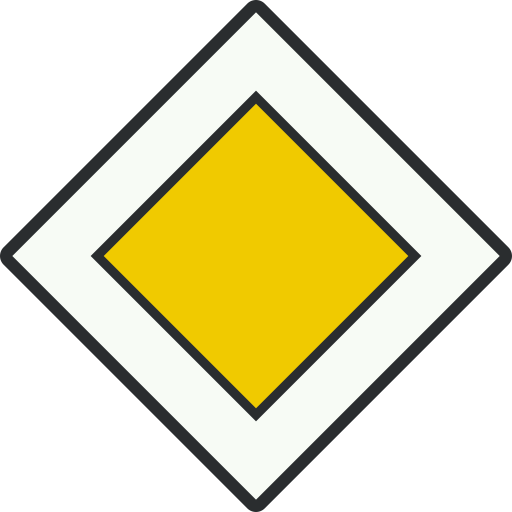 B1Priority road
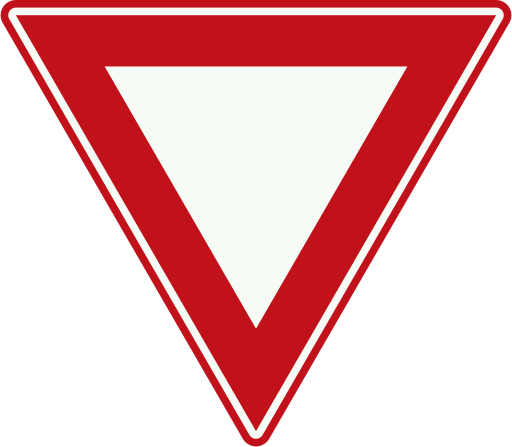 B6Give way to drivers on crossing road
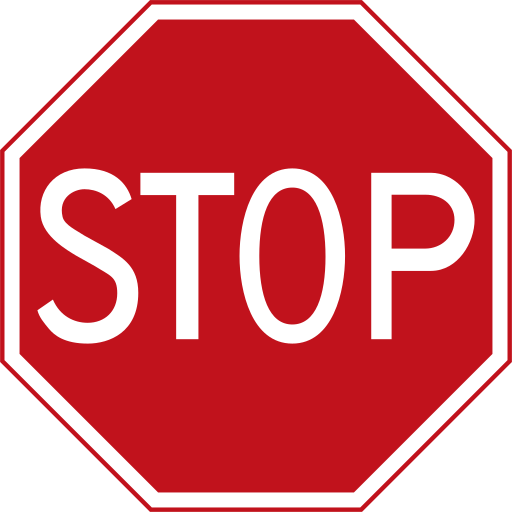 B7Stop; give way to drivers on crossing road
Shark teeth (haaientanden, white triangles painted on the road, art. 80) have the same priority meaning as sign B6: drivers must give way to drivers on the crossing road. At a STOP sign (B7) with a stop line you must always come to a complete standstill and give way to drivers on the crossing road.
Sub-plates (onderborden) and zone signs: common exam traps
Two small details cause a lot of avoidable mistakes in the CBR exam: white sub-plates under a sign and the word "ZONE" above it.
- Sub-plates (onderborden, art. 67): a white plate below a sign narrows or explains the main sign. For example, it may limit a rule to certain hours, show a distance ahead, or exempt a group ("uitgezonderd fietsers" = except cyclists, "uitgezonderd bestemmingsverkeer" = except local traffic).
- Zone signs (art. 66): a normal sign (such as A1-30 or E1) usually applies only until the next junction. When "ZONE" is shown above the sign, the rule applies throughout the whole area — including past junctions — until you pass the grey "einde zone" sign.
- Duty to obey (art. 62): road users must obey every traffic sign or marking that imposes an order or prohibition.
Frequently tested signs for car (B) and moped (AM)
Whether you are preparing for the Dutch car theory exam (B) or moped theory exam (AM), these sign pairs are mixed up most often:
| Signs | The difference the CBR tests |
|---|---|
| E1 vs. E2 | E1 (single red slash) = no parking: you may still stop briefly to immediately let passengers get in/out or to load/unload goods (art. 1 & 24). E2 (red cross) = no stopping at all: even dropping someone off is forbidden (art. 23). |
| C1 vs. C2 | C1 (white circle with red border) = closed in both directions to vehicles, horse riders and people leading animals. C2 (red circle with white bar) = no entry on a one-way street (traffic from the opposite side may still enter). |
| G11 vs. G12a vs. G13 | G11 (round blue with bicycle) = compulsory cycle path for cyclists and snorfiets riders (blue plate), NOT for mopeds (yellow plate). G12a (round blue with bicycle and moped) = compulsory cycle/moped path: mopeds must ride here (art. 6). G13 (rectangular "fietspad") = optional cycle path: a snorfiets with a combustion engine may only use it with the engine off (art. 5 para. 3). |
| G1 vs. G3 | G1 = motorway (autosnelweg: only vehicles permitted and able to reach at least 60 km/h). G3 = autoweg (at least 50 km/h). Mopeds, snorfietsen and brommobielen are never allowed on either (art. 42). |
| G5 vs. G6 | G5 = erf (home zone): pedestrians may use the full width of the road (art. 44), max speed is 15 km/h (art. 45), and motor vehicles may only park in marked spaces (art. 46). G6 = end of erf. |
| F5 vs. F6 | At a narrow stretch of road: F5 (round with red border, red arrow in your direction) = you must let oncoming traffic pass first. F6 (blue square, white arrow in your direction) = oncoming traffic must let you pass first. |
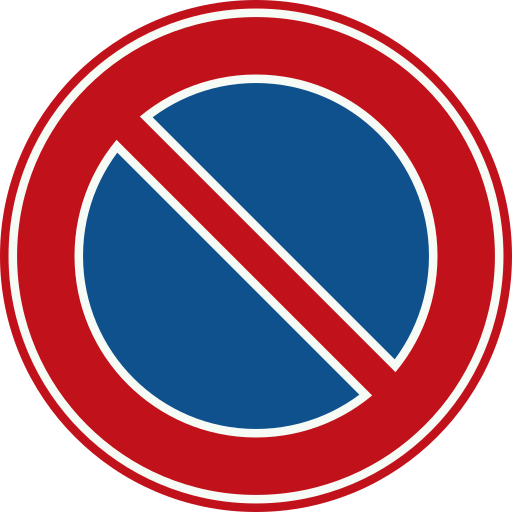 E1No parking
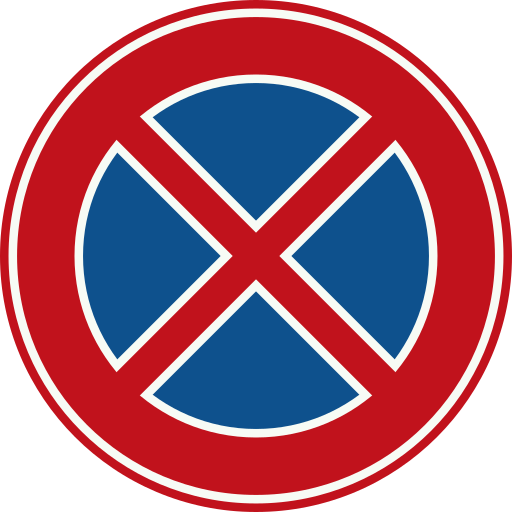 E2No stopping
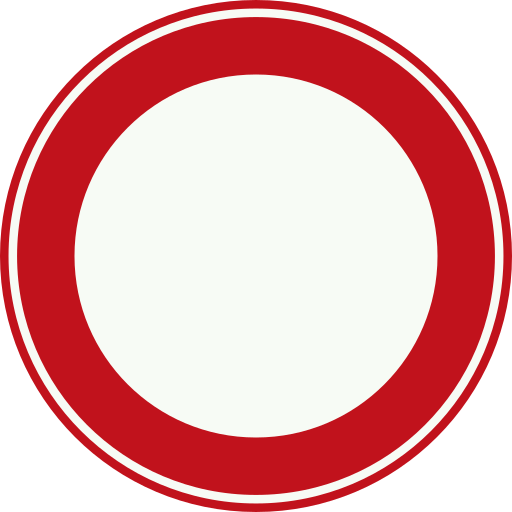 C1Closed in both directions
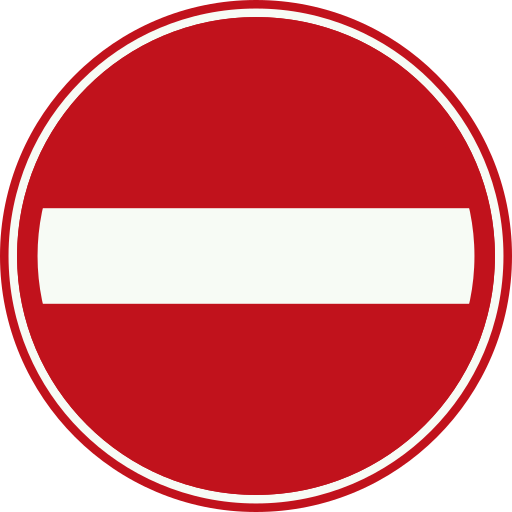 C2No entry (one-way road)
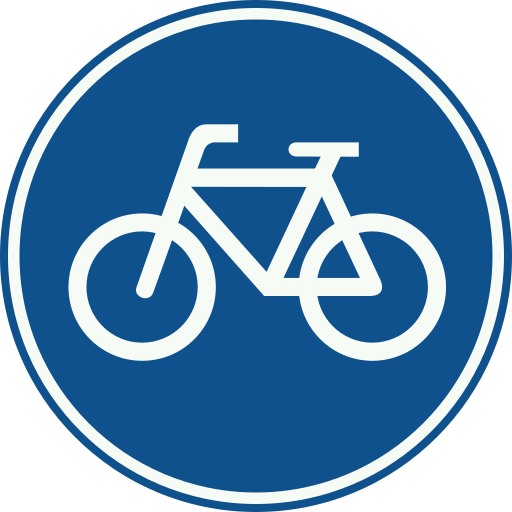 G11Compulsory cycle path
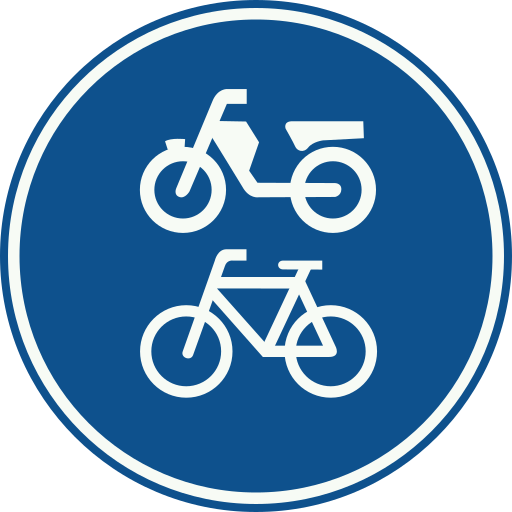 G12aCycle/moped path
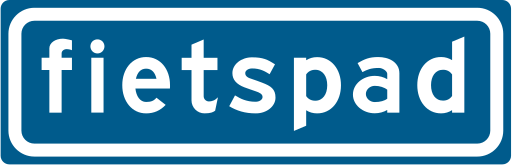 G13Optional cycle path
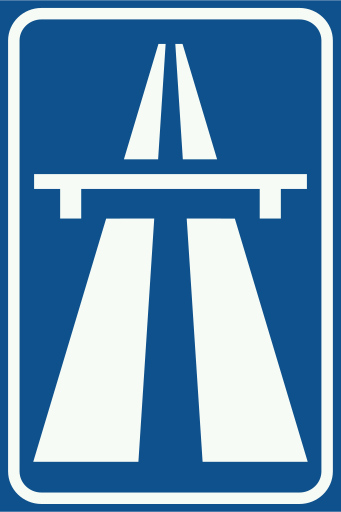 G1Motorway (autosnelweg)
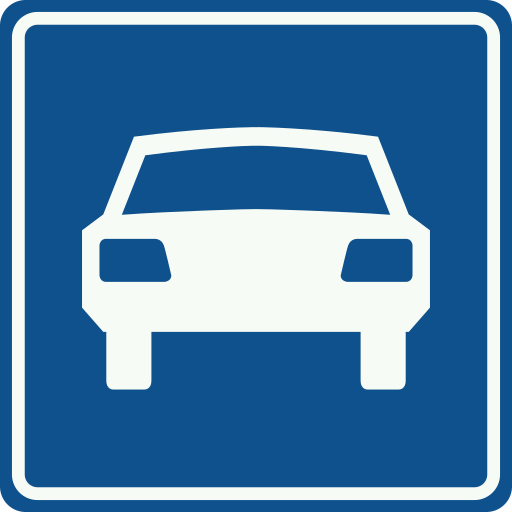 G3Expressway (autoweg)
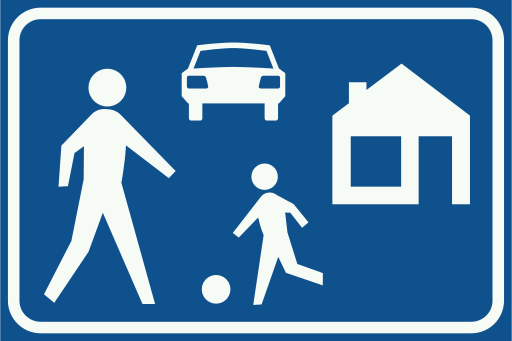 G5Erf / home zone (max 15 km/h)
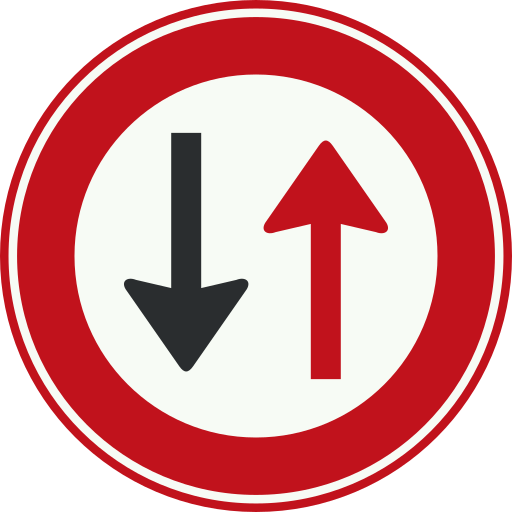 F5Give way to oncoming traffic
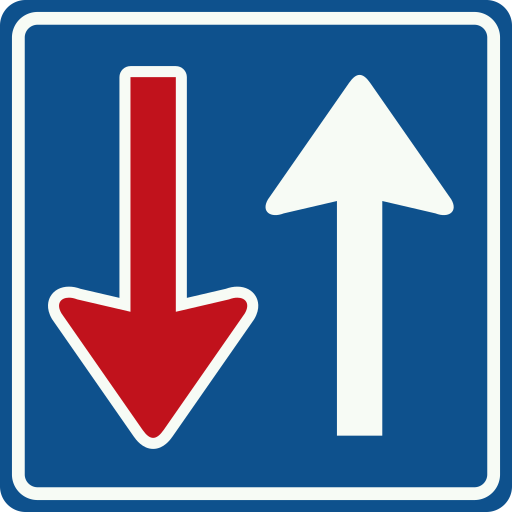 F6Priority over oncoming traffic
3 quick practice questions on Dutch traffic signs
Check whether you have the key differences down:
- Question 1 (E1): You see sign E1 (blue circle with red border and one red slash). May you stop briefly to let a passenger get out right away? — Answer: Yes. E1 is a no-parking sign, not a no-stopping sign. Immediately letting passengers get in or out, or loading/unloading goods, is not parking under RVV 1990 art. 1.
- Question 2 (30 Zone): You enter a 30 km/h zone and pass a junction with no new speed sign. What is the speed limit after the junction? — Answer: Still 30 km/h. A zone sign (art. 66) stays in force past junctions until you pass the grey "einde zone" sign.
- Question 3 (G11 on a moped): You are riding a yellow-plate moped (bromfiets) and see a round blue sign showing only a bicycle (G11). May you ride on that path? — Answer: No. G11 is a compulsory cycle path for cyclists and snorfietsen. On a yellow-plate moped you use the cycle/moped path (G12a) or the carriageway (art. 6).
Practise all Dutch traffic signs in CapyDrive
This page covers the core categories and rules. In CapyDrive you can practise all key Dutch traffic signs in the Traffic Signs & Signals module (part of Premium for car B and Scooter Premium for moped AM), including sub-plates, road markings and 10 full mock exams per licence.
You start free with the first two modules, and if you unlock everything you pay once: €24.99 for Car Premium (which includes the full moped course) or €14.99 for Scooter Premium alone — no subscription and no expiry date.
CapyDrive in short
CapyDrive is a practice app for the Dutch car (B) and moped (AM) theory exams, in English and in Dutch. You learn with short lessons, an explanation for every answer and 10 mock exams per licence in the format of the 2026 CBR exam. For the car course the first 2 modules are free. Premium costs €24.99 once and includes the moped theory; the moped theory alone costs €14.99 once. There is no subscription and no end date. CapyDrive runs in the browser at capydrive.eu and can be installed as an app on your phone; it is not in the App Store or on Google Play. CapyDrive is not connected to the CBR.
Frequently asked questions about Dutch traffic signs
Short answers to the questions we get most often.
- How many traffic sign categories are there in the Netherlands?
- Annex 1 (Bijlage 1) of the RVV 1990 has eleven categories: A (speed), B (priority), C (closed/prohibited), D (mandatory direction), E (parking and stopping), F (other orders and bans), G (traffic rules), H (built-up area), J (warning), K (signposting) and L (information).
- What do shark teeth (haaientanden) on Dutch roads mean?
- Shark teeth are white triangles painted across the lane meaning you must give way to drivers on the crossing road (RVV 1990 art. 80). They carry the same priority rule as sign B6.
- What is the difference between sign E1 and sign E2?
- Sign E1 (one red slash) forbids parking, but you may still stop briefly to immediately drop off or pick up passengers or load/unload goods. Sign E2 (red cross) forbids stopping completely.
- How far does a zone sign apply in the Netherlands?
- A zone sign (RVV 1990 art. 66) applies across the whole area — including past junctions — until you pass the grey "einde zone" sign. A regular sign without "ZONE" normally ends at the next junction.
- Which cycle path sign allows a yellow-plate moped?
- A yellow-plate moped (bromfiets) must use a cycle/moped path marked with sign G12a (round blue with both a bicycle and a moped). Sign G11 (bicycle only) is not for yellow-plate mopeds — use the carriageway instead (RVV 1990 art. 6).
- Do traffic signs override traffic lights in the Netherlands?
- No, the other way around: working traffic lights override priority signs (RVV 1990 art. 64). Only instructions from a police officer or authorised traffic controller override both lights and signs (art. 84).
Practise Dutch traffic signs for car or moped
Start free with the first 2 modules, then unlock all traffic signs, lessons and 10 mock exams per licence with a single one-time payment.